Course Descriptions
Undergraduate and graduate courses in special education — disabilities studies, assessment, assistive technology, visual impairments, and behavioral management.
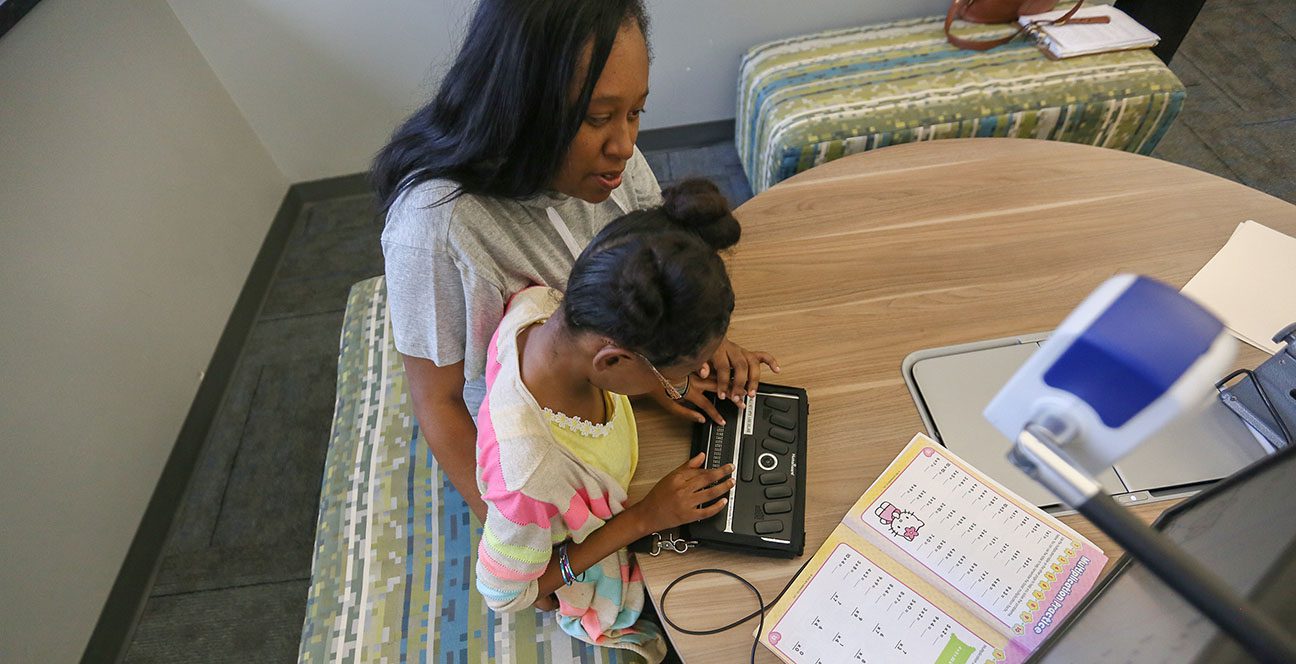
Courses in special education
Special Education courses at Jackson State University are offered through the Department of Educational, Multicultural, and Exceptional Studies in the College of Education and Human Development.
Course descriptions are grouped below by level. Jump to undergraduate courses or graduate courses. Credit hours are shown in parentheses after each course number.
- Prefix
- SPED
- Department
- Educational, Multicultural, and Exceptional Studies
- College
- Education and Human Development
- Undergraduate Courses
- 24
- Graduate Courses
- 38
- Phone
- 601.979.2370
Undergraduate courses
SPED 304 (3) Organizational Procedures for Special Education
A study of organizational structures, programmatic procedures, policies, resources, and guidelines essential to the delivery of educational services for children with special needs.
SPED 306 (3) Introduction to Disabilities Studies
A study of classifications, characteristics, and interactions of biological, emotional and social factors concerning persons with disabilities. It also emphasizes programs and practices for persons with disabilities in non-traditional settings.
SPED 307 (3) Behavioral Management for Exceptional Children
Emphasis is placed on current techniques, educational strategies and tools that will aid the teacher in understanding and handling behavior problems in the classroom.
SPED 311 (3) Exceptional Children and Youth in the Schools
A study of definitions, classifications, characteristics, educational programs and problems of children and youth with special needs.
SPED 339 (3) Vocational / Career Planning for Adolescents with Exceptionalities
An investigation of strategies for developing vocational and career education and employment opportunities for students with disabilities.
SPED 367 (3) Introduction to Persons with Hearing Impairments
Focuses on causes of hearing impairment, educational facilities, the methods controversy, and family adjustment, which are necessary in order to fully understand the child with a hearing impairment.
SPED 368 (3) Family and Community Resources
An exploration of locating and utilizing community resources in helping persons with disabilities and their families.
SPED 369 (3) Strategies for Managing Violent and Aggressive Behaviors
Emphasizes prevention and crisis management models, verbal intervention and personal safety skills applicable with verbally aggressive and physically violent behavior.
SPED 400 (3) Medical Aspects of Disabilities
A study of definitions, classifications, characteristics, evaluations, diagnosis, and treatments of medical conditions of children and youth with exceptionalities.
SPED 402A (12) Clinical Internship in Student Teaching
A continuation of the practical learning experiences engaged in during the EDCI 401 course, but in a more intensified and concrete manner. These experiences occur in off-campus school and community situations for twelve weeks, where opportunity is given to the student teacher to test theories of teaching and learning and to initiate and test ideas with children. With guidance and supervision, the student teacher is also given the opportunity to develop the ability, initiative and responsibility for planning, guiding and evaluating the total program of the children with whom they are working.
SPED 402 (12) Clinical Internship in Disabilities Studies
Placement of seniors who have completed SPED 306, 307, 339, 368, 369, 400, 403, 466, 467, 480, 482, and 499 with agencies where they can gain on-the-job experience in non-teaching settings.
SPED 403 (3) Teaching Persons with Severe and Profound Disabilities
Provides students with the skills and understanding needed to teach persons with severe and profound disabilities: program needs, services, and an overview of the role of persons with severe and profound disabilities within society.
SPED 420 (3) Introduction to Assistive Technology
Provides hands-on demonstration of technology and software that facilitates new ways of teaching and learning for individuals with disabilities.
SPED 422 (3) Education and Psychology of Persons with Mild / Moderate Disabilities
An overview of the three traditional disability groups: learning disabilities, mild intellectual disabilities, and mild behavior disorders.
SPED 428 (3) Educational Assessment
Investigation of instruments and procedures in assessing exceptional children; their interpretation, usefulness and limitations in diagnosing problems and planning educational programs.
SPED 430 (3) Education and Psychology of Persons with Intellectual Disabilities
Deals with the medical and behavioral classifications, characteristics, interaction of biological, emotional and social factors, educational philosophy, objectives and programs for persons with intellectual disabilities.
SPED 432 (3) Education and Psychology of Persons with Learning Disabilities
Survey of the historical development of learning disabilities, problems of definition and classification, screening and diagnosis, and instructional systems.
SPED 450 (3) Education and Psychology of Children with Behavioral Disorders
Characteristics, causes and problems of emotional disturbance in children and youth; diagnosis and placement, and in-depth study of educational programs.
SPED 466 (3) Introduction to Sign Language
Emphasizes fundamental skills of sign language used by individuals with hearing impairments in the communicative process.
SPED 467 (3) Advanced Sign Language
Prerequisite: SPED 466. Emphasizes the interpretation of English language into sign language and presents colloquialisms that are prevalent in informal conversational situations among individuals with hearing impairments.
SPED 468 (3) Introduction to Interpreting
Prerequisites: SPED 466 and SPED 467. Development of skills necessary for interpreting for individuals with hearing impairments in educational and other related settings. It also emphasizes the values and ethics of interpreting.
SPED 480 (3) Education and Psychology of Persons with Physical Disabilities
Description of the various types of orthopedic and other health impairments among children and youth: etiology, characteristics, medical aspects, and needs of each type.
SPED 498 (3) Seminar on Persons with Hearing Impairments
Current problems, issues, and trends in the field of hearing impairment.
SPED 499 (3) Seminar on Mild / Moderate Disabilities
Current problems, trends and issues in the field of mild and moderate disabilities.
Graduate courses
SPED 500 (3) Survey of Exceptional Children
A study of definitions, characteristics, educational programs and problems of individuals with disabilities.
SPED 503 (3) Teaching Persons with Severe and Profound Disabilities
Provides students with the skills and understanding needed to teach persons with severe and profound disabilities: program needs, services, and an overview of the role of persons with severe and profound disabilities within society.
SPED 504 (3) Administrative and Organizational Procedures for Special Education
A study of administrative and organizational structures, programmatic procedures, policies, resources, and guidelines essential to the delivery of educational services for exceptional learners. Prerequisites: SPED 500, 507, 528, 530, 532, 550, 599, 586.
SPED 507 (3) Advanced Methods in Behavioral Management
Emphasis is placed on current techniques, educational strategies and tools that will aid the teacher in understanding and handling behavior problems in the classroom. Prerequisites: SPED 500, 528, 530, 532, 550, 599.
SPED 508 (3) Educational Management of Students with Visual and Multiple Disabilities
Emphasis is placed on techniques, educational strategies, and tools that will aid the teacher in (1) understanding and addressing behavior and related problems of students with visual and multiple disabilities and (2) understanding issues related to the influences of additional disabilities on students who are visually impaired. Prerequisites: SPED 540, 541, 542, 543.
SPED 516 (3) Career Education for Individuals with Disabilities
Dissemination of information about daily living skills, personal social skills, and occupational guidance and preparation in the career development of individuals with disabilities.
SPED 520 (3) Assistive Technology for Individuals with Disabilities
A survey of assistive technology and devices, legislation and issues related to assistive technology. Hands-on demonstration experiences of technology and software that facilitate new ways of teaching individuals with disabilities are provided. Prerequisite: SPED 500.
SPED 528 (3) Advanced Educational Assessment and Prescriptive Planning in Special Education
Special diagnostic procedures with exceptional learners, with implications for prescriptive planning. Prerequisites: SPED 500, 530, 532, 550, 599.
SPED 529 (3) Assessment Procedures for Individuals with Visual Impairments and Multiple Disabilities
Introduction to the concepts, issues, instruments and procedures involved in assessing children and adolescents with visual impairments. Prerequisites: SPED 540, 542, 543.
SPED 530 (3) Education and Psychology of Persons with Intellectual Disabilities
Deals with the medical and behavioral classifications, characteristics, interaction of biological, emotional and social factors, educational philosophy, objectives and programs for persons with intellectual disabilities. Prerequisite: SPED 500.
SPED 532 (3) Education and Psychology of Persons with Learning Disabilities
Survey of the historical development of learning disabilities, problems of definition and classification, screening and diagnosis, and instructional systems. Prerequisite: SPED 500.
SPED 540 (3) Introduction to Visual Impairments
An introductory course providing a comprehensive, lifespan overview of the field of visual impairments. Examines the legal, demographic, historical, and psychosocial perspectives, as well as the various services and programs available. Through demonstration, simulation, and practical experiences, students are exposed to a variety of adaptive skills, techniques, and devices used by persons with visual impairments. Prerequisite: SPED 500.
SPED 541 (3) Methods and Materials in Teaching Students with Visual Impairments
Students design appropriate educational environments and plan instructional programs for low vision students, including vision assessment, Braille literacy, learning media assessments, instructional strategies for activities of daily living, concept development, social skills, and subject content.
SPED 542 (3) Medical and Educational Implications of the Structure and Function of the Eye
Provides an overview of normal and abnormal development of the human eye. Topics include ocular anatomy and physiology, pathological conditions affecting the human eye, and clinical and functional vision assessments. A strong low vision component is provided, including functional vision assessments, environmental vision assessments, optics, the use of optical devices, and the principles of optimizing visual efficiency. Prerequisites: SPED 540, 543.
SPED 543 (3) Introduction to Braille and Other Technology
Emphasis is placed on technologies, educational strategies, and tools that will aid teachers in (1) understanding and addressing behavior and related problems of students with visual and multiple disabilities and (2) understanding issues related to the influence of additional disabilities on students with visual impairments. Prerequisite: SPED 500.
SPED 544 (3) Introduction to Orientation and Mobility
Designed to give practical applications of orientation and mobility techniques to be used by teachers of students who are blind and visually impaired. Offers instruction and experience through supervised blindfold activities in indoor and commercial environments, including special travel situations, shopping malls, and in-store travel. Prerequisites: SPED 508, 529, 540, 541, 542, 543.
SPED 550 (3) Education and Psychology of Children with Behavioral Disorders
Characteristics, causes and problems of emotional disturbances in children and youth; diagnosis and placement, and in-depth study of educational programs.
SPED 552 (3) Personality Development of Exceptional Children
Designed to enhance knowledge related to personality development of children with exceptional learning needs and various theories of personality problems.
SPED 569 (3) Strategies for Managing Violent and Aggressive Behaviors
Emphasizes prevention and crisis management models, verbal intervention and personal safety skills applicable with verbally aggressive and physically violent behavior. Prerequisites: SPED 530, 532, 550.
SPED 570 (3) Education and Psychology of the Gifted and Talented
Characteristics of youth with potential superior performance in areas of academics, creativity, and talent. Emphasis on recent trends of school, home and community planning and on the culturally diverse gifted. Prerequisite: SPED 500.
SPED 571 (3) Methods and Materials in Teaching the Gifted and Talented
Emphasis is given to innovative techniques and models appropriate for teaching the gifted and talented. Curricular development for the culturally diverse gifted receives special treatment. Prerequisite: SPED 500.
SPED 572 (3) Learning Theories for Special Educators
Designed to provide students with a basic understanding of selected theories of learning and to enable an analysis of curriculum strategies and materials to facilitate learning. Prerequisite: SPED 500.
SPED 579 (3) Research and Independent Study
Implementation of an individual student research project under the guidance of an adviser. Prerequisite: advisor approval.
SPED 586 (3) Practicum in Special Education
Supervised practicum; application of methods and techniques appropriate to various exceptionalities. SPED 586 Practicum: Mild/Moderate Disability; SPED 588 Practicum: Visually Impaired; SPED 589 Practicum: Behavior Disorders. Prerequisites: SPED 500, 528, 530, 532, 550, 599.
SPED 599 (3) Seminar in Special Education
Current problems, issues, and trends in the field of special education. Prerequisites: SPED 500, 530, 532, 550.
SPED 600 (3) Guidance for Exceptional Children and Youth
Study of problems of personal, social, educational, and vocational adjustment of children and youth with disabilities.
SPED 601 (3) Behavioral Management Approaches with Exceptional Children and Youth
Classroom application of strategies for managing behavioral problems in the school, with emphasis on research in classroom behavior modification. Prerequisites: SPED 600, 605, 606, 607, 699.
SPED 602 (3) Administrative and Organizational Procedures for Special Education
Study of cognitive development of children with exceptional learning needs, with emphasis on the impact of exceptionality on cognition.
SPED 603 (3) Psychoeducational Evaluation of Exceptional Children
Procedures in assessing children and youth with exceptional learning needs, with special attention given to interpretation and application of diagnostic instruments for the purpose of planning prescriptive programs.
SPED 604 (3) Administration and Supervision in Special Education
Analysis of organizational and administrative principles and practices for diverse programs in special education. Prerequisites: SPED 600, 605, 607, 679, 686.
SPED 605 (3) Psychological Aspects of Exceptionality
Intensive study of research findings relevant to differences in children with exceptionalities. The psychological, social, and vocational aspects of successful adjustment are stressed.
SPED 606 (3) Consulting, Itinerant, and Resource Teaching in Special Education
Role, responsibilities, and problems of consulting, itinerant, and resource teachers in special education. Prerequisites: SPED 600, 605, 607, 699.
SPED 607 (3) Research in Exceptional Child Education
Study, analysis, and evaluation of selected research and other literature reflecting various areas of exceptionality. Prerequisite: SPED 605.
SPED 679 (3) Individual Research
Special attention given to design, application, and evaluation of student research projects, conducted under the supervision of an advisor. Prerequisites: permission of advisor, pass English competency, pass area comprehensive examination; SPED 600, 605, 607, 686.
SPED 686 (3–6) Practicum in Special Education
Supervised practicum; application of methods and techniques appropriate to various exceptionalities. Prerequisite: SPED 605.
SPED 699 (3) Seminar in Special Education
Intensive study and analysis of contemporary issues and trends in the area of special education, with implications for curriculum planning and teaching methodology. Prerequisites: SPED 600, 605, 607.
SPED 701 (3) Assessment of Special Populations
Interpretation of test data to be used in remedial planning for individuals in special education programs.
SPED 706 (3) Medical Aspects of Developmental Disabilities
A study of definitions, classifications, characteristics, evaluations, diagnosis, and treatments of medical conditions of individuals with exceptionalities.
More from Special Education
Teach students with exceptional needs
Special Education programs preparing teachers, interpreters, and specialists across Mississippi.
Contact Special Education
College of Education and Human Development
1400 John R. Lynch Street
Jackson, MS 39217-0280